
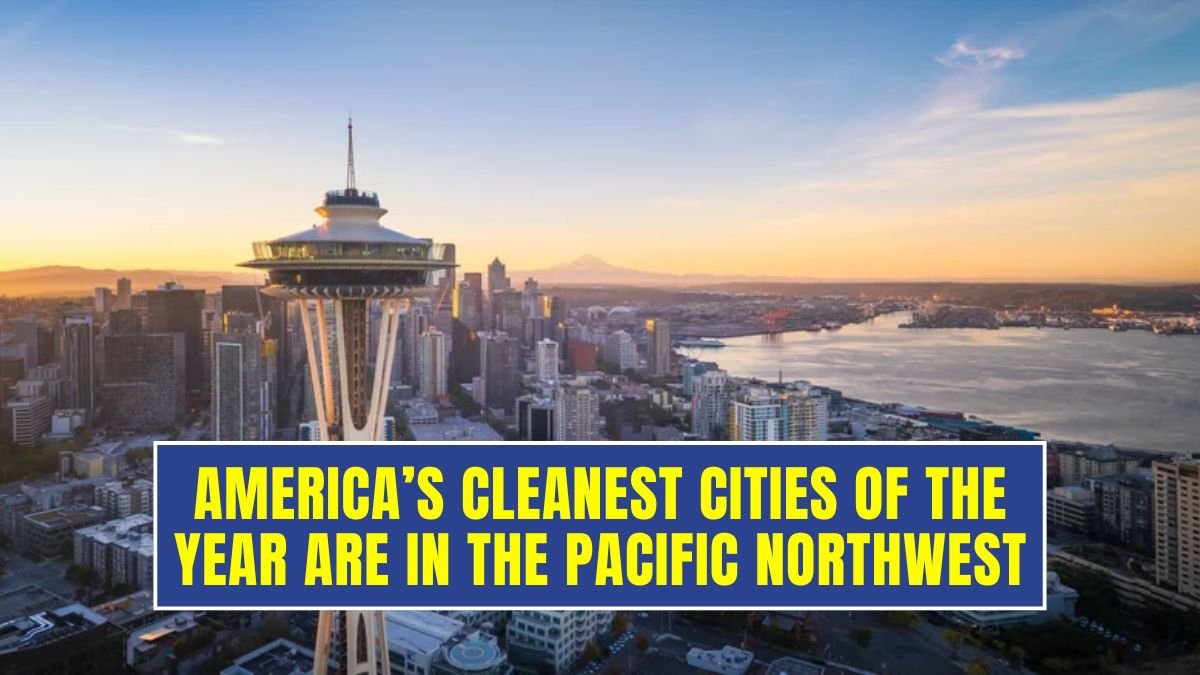
Every year, lists of “cleanest cities” are released in different countries around the world. But when it comes to the United States, major cities like New York, California, or Chicago usually dominate the discussion. However, this year’s 2025 report has surprised everyone. According to an independent study, this year’s cleanest cities in the United States are located not in any major metropolis, but in the Pacific Northwest region.
This report has not only delighted environmentalists but also forced policymakers and citizens to wonder what this region has done to achieve the highest cleanliness ranking in the entire country.
What is the Pacific Northwest?
The Pacific Northwest, also known as the Pacific Northwest, is a beautiful and green region of the United States that includes states like Washington, Oregon, and, to a lesser extent, Idaho. This region is renowned for its lush forests, clean rivers, and environmentally conscious citizens.
People here consider nature not just a resource, but the foundation of life. This is why policies prioritize environmental protection. Whether it’s waste management, banning plastic use, or improving public transportation—this region has worked extensively on every aspect of cleanliness.
What did the 2025 Cleanliness Report reveal?
The 2025 report, released by a prestigious US environmental research organization, examined 100 major cities in the country in depth, examining their cleanliness, air quality, water sanitation, waste management, recycling, and civic awareness.
According to the report, seven of the top 10 cleanest cities are in the Pacific Northwest region. These include Portland, Seattle, Tacoma, and Eugene.
These cities have not only succeeded in reducing pollution levels but have also set an example by adopting environmentally friendly technologies and sanitation campaigns.
Why was the rest of America surprised?
As soon as the report was released, discussions began across the United States about how these relatively small cities in the Pacific Northwest could outperform larger states and metropolitan areas in terms of cleanliness.
The answer to this question is simple: “A Culture of Sustainability.”
People here don’t rely solely on government programs, but also take responsibility for the environment on an individual level. Each household puts garbage in separate bins—one for recyclables and the other for non-recyclables.
Local governments are also strict. Anyone caught littering in the open faces heavy fines. Furthermore, these cities make extensive use of green energy and public transportation, which keeps pollution levels low.
Policies and Strategies Behind Cleanliness
A major reason for the Pacific Northwest region’s success is its “local governance model.”
The city administration has implemented a “Zero Waste Policy” over the past few years, aiming to recycle over 90% of waste in these cities by 2030.
Furthermore, children are taught the importance of cleanliness and the environment from an early age in schools and colleges. Local municipalities also conduct regular cleanliness drives and encourage communities to organize “Clean-up Days,” where people collectively clean their areas.
This community spirit is the driving force behind every citizen’s responsibility to ensure the cleanliness of their city.
Improving the Quality of Life Along with the Environment
Clean cities have an impact not only on the environment but also on people’s quality of life.
In cities like Portland and Seattle, not only is the air clean, but the drinking water is also of high quality.
According to a World Health Organization sub-study, the average life expectancy of people living in these cities is approximately three years higher than in other US cities.
The reason for this is less pollution, more greenery, and mental peace.
This fact proves that when a city is clean, its residents also become healthier, happier, and productive.
Lessons for the rest of America’s cities
This report also sends a clear message to other major US cities: development isn’t just about tall buildings and wide roads, but about clean air, clean water, and responsible citizens.
Major cities like Los Angeles, Chicago, and Houston are now considering adopting the Pacific Northwest model.
Many cities have launched their “Clean City 2030” mission, which aims to achieve major improvements in waste management and sanitation over the next five years.
The Role of Environmentally Conscious Citizens
If the Pacific Northwest’s success were to be summed up in one sentence, it would be: “Citizen awareness became the city’s identity.”
People here don’t just rely on sanitation workers, but also participate in cleaning themselves.
Many communities have taken responsibility for their streets or neighborhoods under schemes like “Adopt-a-Street.”
They regularly clean streets, plant trees, and work with the local administration to maintain cleanliness.
Clean Cities – Steps Towards a Clean Future
Today, the entire world is grappling with challenges like climate change and pollution. In such a context, this example from the Pacific Northwest region is inspiring not only for the United States but also for the world.
If every country takes steps toward making its cities clean and sustainable in this way, the environmental crisis can be significantly mitigated.
Cleanliness should become a part of life, not just a campaign.
Conclusion: Cleanliness holds the solution to the future
This 2025 report from the Pacific Northwest region of the United States testifies that when government, citizens, and technology work together, even the impossible becomes possible.
While the rest of America still struggles with pollution and waste management, this region has set a new standard.
It is clear that cleanliness is not just a symbol of beauty, but also the hallmark of a developed, healthy, and conscious society.
FAQs
1. What is the 2025 Cleanest Cities Study about?
A. It’s a new environmental report ranking U.S. cities based on cleanliness, air quality, and waste management.
2. Which cities topped the 2025 cleanest list?
A. Cities like Portland, Seattle, Tacoma, and Eugene from the Pacific Northwest ranked the highest.
3. Why are these cities considered the cleanest?
A. They have strong recycling systems, low pollution, clean public spaces, and eco-conscious citizens.
